role of safety managers in compliance
The Role of Safety Managers in Compliance: 2026 Guide
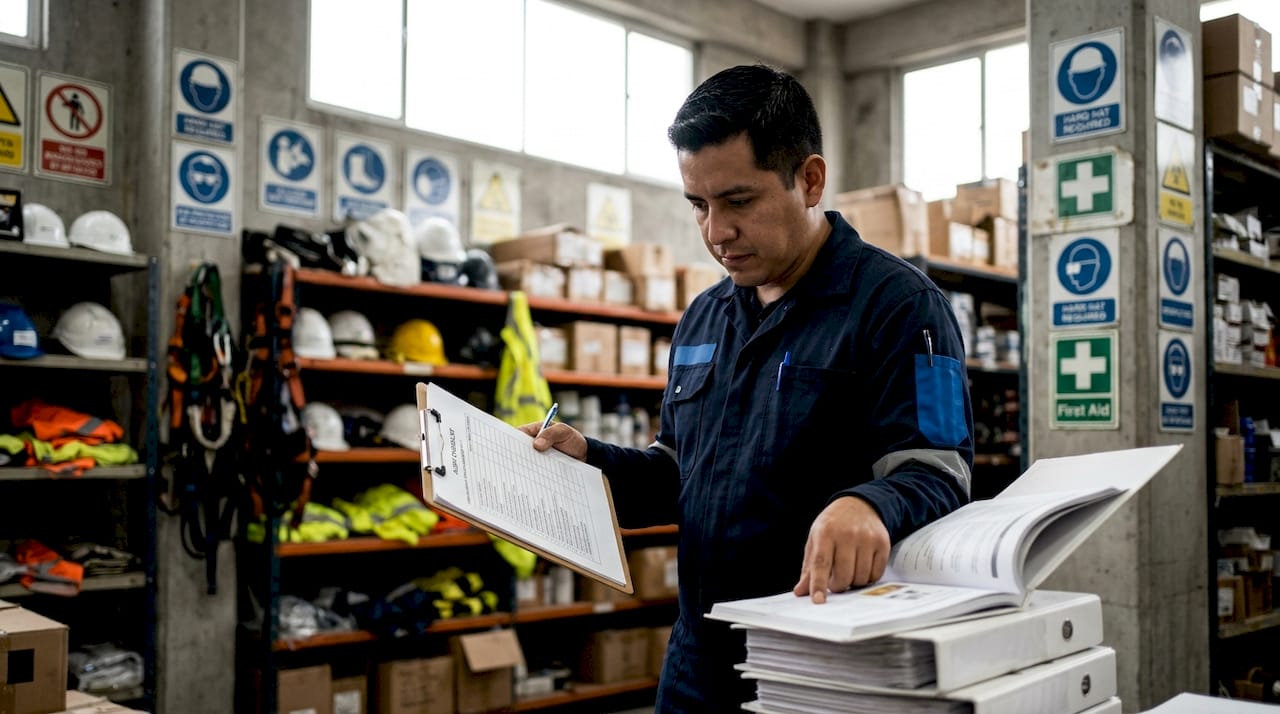
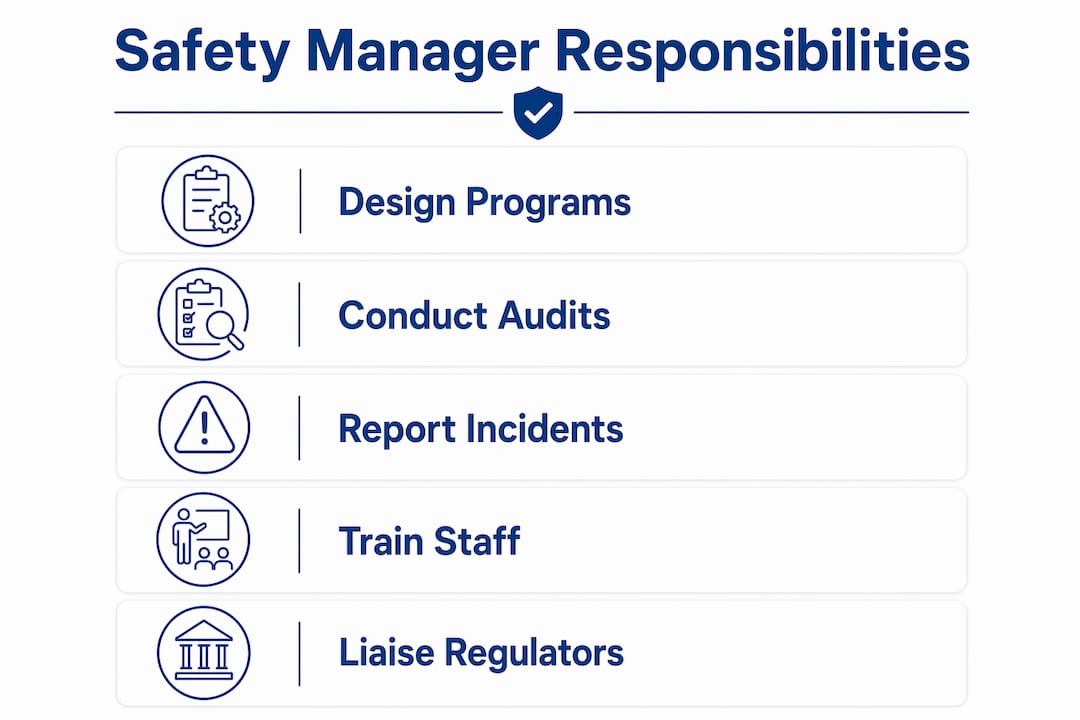
The Role of Safety Managers in Compliance: 2026 Guide ! Safety manager reviewing compliance documents Safety managers are defined as the operational architects of workplace compliance, responsible for designing, implementing, and overseeing safety programs that keep organizations aligned with OSHA regulations, ISO 45001, and ANSI Z10 standards.
The Role of Safety Managers in Compliance: 2026 Guide

Safety managers are defined as the operational architects of workplace compliance, responsible for designing, implementing, and overseeing safety programs that keep organizations aligned with OSHA regulations, ISO 45001, and ANSI Z10 standards. The role of safety managers in compliance spans policy management, regulatory inspections, incident investigation, and workforce training. Top management holds ultimate accountability for risk, but relies on safety managers as the primary advisors and executors of every compliance program. Without this function, organizations face citation exposure, operational liability, and workforce harm.
What are the key responsibilities of safety managers in compliance management?
Safety managers own and maintain written safety programs under OSHA standards 29 CFR 1910 and 29 CFR 1926, manage incident recordkeeping per 29 CFR 1904.39, and serve as the main regulatory interface during inspections. These responsibilities form the operational core of compliance in safety management. Each duty connects directly to legal exposure and workforce protection.
The specific duties safety managers perform include:
- Written program development. Safety managers draft and update required programs covering hazard communication, lockout/tagout, respiratory protection, and fall prevention under 29 CFR 1910 and 1926.
- Workplace inspections and risk assessments. Regular walkthroughs identify hazards before regulators do. Findings feed directly into corrective action logs.
- Incident investigation and root cause analysis. Safety managers lead post-incident reviews to identify systemic failures, not just proximate causes.
- Workforce training and contractor safety. Training programs must be documented, competency-verified, and aligned with applicable standards.
- Compliance KPI reporting. Safety managers report leading and lagging indicators, including near-miss rates, inspection completion rates, and corrective action closure times, to leadership.
- Audit-ready documentation. EHS platforms generate ongoing evidence of compliance rather than requiring last-minute document assembly before audits.
Pro Tip: Build your audit file continuously. Safety managers who maintain real-time documentation in a centralized system spend far less time preparing for inspections and far more time preventing incidents.
How do safety managers interface with regulatory bodies?
Safety managers serve as the company's primary contact during OSHA inspections, a responsibility that requires both procedural knowledge and composure under pressure. The OSHA Field Operations Manual codifies the inspection sequence, and safety managers who know it gain a measurable advantage in citation defense.
The standard inspection process follows this sequence:
- Request an opening conference. Safety managers coordinate the opening conference to establish scope, clarify the inspection trigger, and set the tone for the walkthrough.
- Accompany the inspector personally. Walking the inspector through the facility allows the safety manager to provide context, correct misunderstandings in real time, and document what the inspector observes.
- Manage documentation requests. Safety managers produce required records promptly, including injury logs, training records, and written programs, per established timelines.
- Attend the closing conference. The closing conference is where potential citations are previewed. Safety managers use this opportunity to present corrective actions already underway.
- Draft contest letters within 15 working days. OSHA citation appeals must be filed within 15 working days of receipt. Missing this window forfeits the right to contest.
Incident recordkeeping under 29 CFR 1904.39 requires safety managers to report fatalities within 8 hours and hospitalizations, amputations, or eye losses within 24 hours. These are non-negotiable deadlines with direct penalty exposure.
Pro Tip: Separate your Safety Manager and Compliance Officer roles if your organization operates across multiple sites. Multi-site organizations benefit from dedicated compliance officers handling citation defense while safety managers focus on operational controls.
What organizational challenges affect safety managers' effectiveness?
Safety managers frequently operate without direct authority over the decisions that create the most compliance risk. Line managers control production schedules, staffing levels, and equipment maintenance budgets. Safety managers advise, but top management owns the budget and the final risk decision. This structural gap is the most common reason compliance programs fail despite technically competent safety personnel.
The core organizational challenges include:
- Advisory role without enforcement authority. Safety managers can identify a hazard and recommend corrective action. They cannot always compel a production supervisor to stop a line.
- Budget and hiring constraints. Safety programs require funding for training, equipment, and personnel. Safety managers who lack budget authority cannot implement the controls they design.
- Surface compliance versus operational integration. Organizations that treat compliance as a paperwork exercise create hidden gaps. Recurring controls like permits-to-work and checklists go untracked, and gaps only surface during audits or incidents.
- Leadership modeling failures. When executives do not visibly prioritize safety, the workforce reads the signal accurately. Leadership failure to fund or model safety behavior undermines every program a safety manager builds.
The distinction between safety manager responsibilities and leadership accountability matters here. Safety managers cannot substitute for leadership commitment. They can build the system, but leadership must operate it.
What best practices help safety managers improve compliance?
Effective compliance in safety management requires moving from documentation-focused programs to controls embedded in daily work. This shift, often called "deep compliance," treats safety as a standard operating procedure rather than a separate audit function. Embedding controls into daily tasks reduces incidents and creates sustainable compliance performance.
Technology and digital platforms
EHS software centralizes document control, automates recurring task assignments, and tracks KPI completion in real time. Safety managers using digital platforms generate continuous evidence of compliance rather than assembling documents reactively. Guardiahr reports a compliance posture score of 87%, reflecting what centralized, automated compliance governance produces at scale.
Training and competency alignment
Training programs aligned with ANSI Z10 and ISO 45001 require documented competency verification, not just attendance records. Safety managers who assess comprehension and skill application create a defensible training record and a more capable workforce.
Audit cadence and continuous improvement
- Practice: Internal safety audits · Purpose: Identify gaps before regulators do · Frequency: Quarterly
- Practice: Incident root cause reviews · Purpose: Prevent recurrence through systemic fixes · Frequency: After every recordable
- Practice: Compliance KPI reporting · Purpose: Track leading indicators and corrective action closure · Frequency: Monthly
- Practice: Worker participation programs · Purpose: Surface hazards management cannot see · Frequency: Ongoing
- Practice: Written program reviews · Purpose: Keep documentation current with regulatory changes · Frequency: Annually
Worker participation programs deserve specific attention. Frontline workers identify hazards that safety managers and supervisors miss because they perform the work daily. Structured near-miss reporting and safety committee participation are the most direct channels for this intelligence.
Pro Tip: Track compliance checkpoint completion rates as a leading indicator. A declining completion rate on permits or checklists predicts an incident before one occurs.
Key Takeaways
The role of safety managers in compliance requires technical authority, leadership alignment, and operational integration to produce results that hold up under regulatory scrutiny.
- Point: Regulatory ownership · Details: Safety managers own written programs under 29 CFR 1910, 1926, and 1904.39 and lead all OSHA inspection activities.
- Point: Leadership dependency · Details: Compliance success depends on leadership funding and modeling safety, not safety department effort alone.
- Point: Deep compliance · Details: Embedding controls into daily workflows produces safer outcomes than paperwork-only programs.
- Point: Role separation · Details: Multi-site organizations benefit from separating Safety Manager and Compliance Officer functions for focused effectiveness.
- Point: Technology as evidence · Details: Digital platforms generate continuous compliance documentation, reducing audit preparation time and citation exposure.
Why the safety manager's role is more complex than most job descriptions admit
I have spent years watching organizations hire technically qualified safety managers and then structurally prevent them from succeeding. The job description lists OSHA expertise, audit skills, and training program management. What it rarely lists is the political capital required to get a production supervisor to stop a line for a hazard that has not yet caused an injury.
The most effective safety managers I have observed operate as internal consultants, not enforcers. They build relationships with line managers before an incident creates urgency. They present compliance data in terms leadership understands, connecting citation risk to financial exposure rather than regulatory abstraction. They know that safety compliance is a leadership decision, and they spend as much time managing upward as they do managing programs.
The 2026 compliance environment adds real-time monitoring expectations that did not exist five years ago. Safety managers are now expected to produce live dashboards, not quarterly reports. That shift requires platform infrastructure, not just personal competence. Safety managers who lack digital tools are being asked to compete in a data-driven environment with analog methods.
My honest view is that the profession is bifurcating. Safety managers in well-resourced organizations with leadership commitment are producing measurably better outcomes. Safety managers in under-resourced organizations with passive leadership are managing liability, not safety. The gap between those two groups is widening, and the deciding variable is almost never the safety manager's technical skill.
— Luka
How Guardiahr supports safety managers in compliance operations
Safety managers need infrastructure that matches the pace of regulatory expectations in 2026. Guardiahr provides an enterprise compliance operations platform built for exactly this environment, centralizing documentation, automating recurring workflows, and connecting safety performance data directly to leadership dashboards.
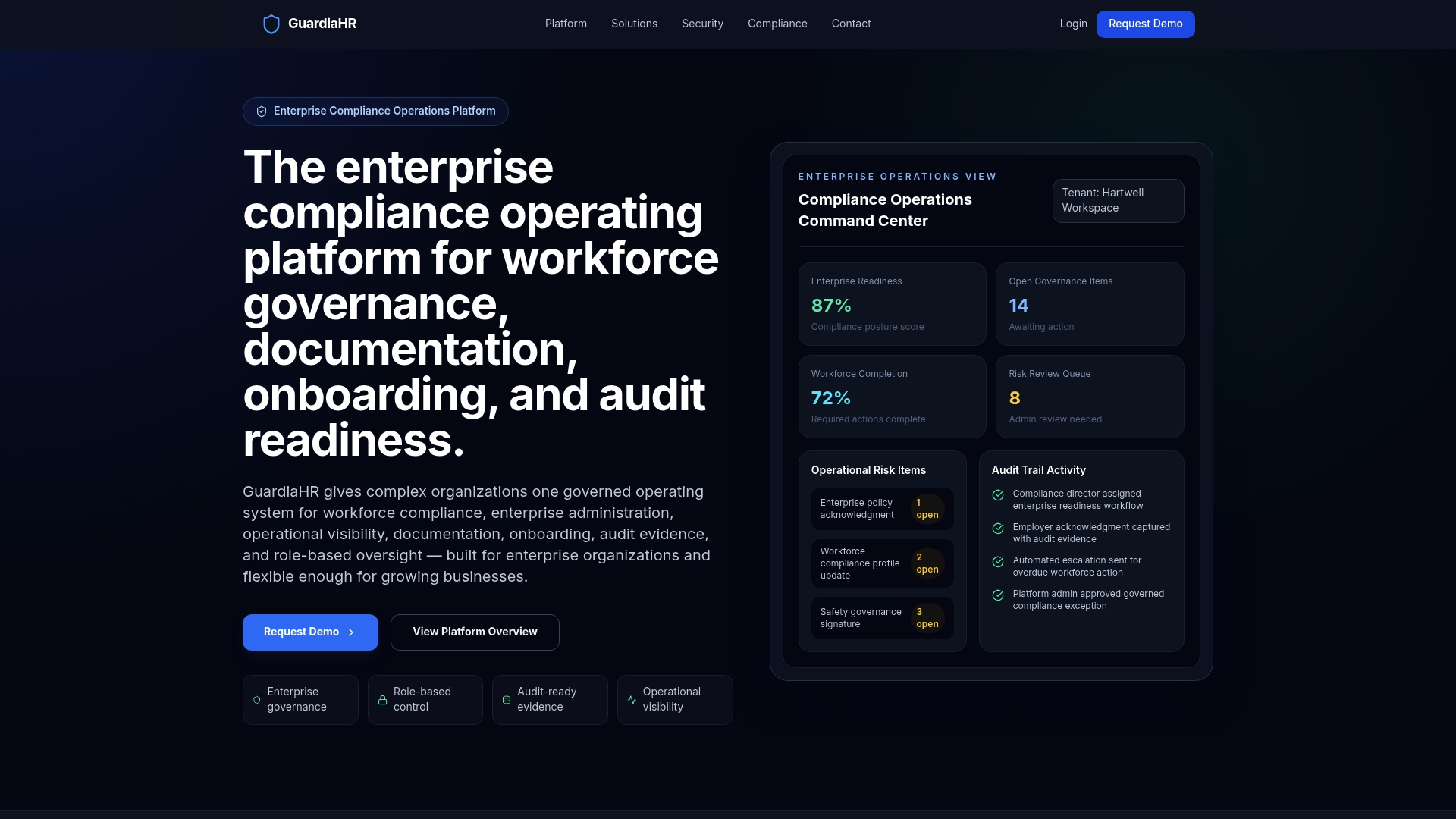
Guardiahr's OSHA compliance tools give safety managers audit-ready documentation without manual assembly. The platform's workflow automation assigns recurring controls, tracks completion, and alerts safety managers when tasks fall overdue. Role-based administration ensures the right personnel own the right compliance functions, mirroring the organizational structure that produces effective safety programs. For safety managers who need to demonstrate compliance posture to leadership, Guardiahr delivers the real-time visibility that quarterly reports cannot.
FAQ
What is the primary role of a safety manager in compliance?
Safety managers design, implement, and oversee safety programs aligned with OSHA regulations, ISO 45001, and ANSI Z10 to keep organizations legally and operationally compliant. They also serve as the primary regulatory interface during inspections and citation processes.
How do safety managers handle OSHA inspections?
Safety managers coordinate opening and closing conferences, accompany inspectors during walkthroughs, produce required documentation, and file citation contests within the 15-working-day appeal window established by the OSHA Field Operations Manual.
What is the difference between a safety manager and a compliance officer?
Safety managers focus on operational safety programs, training, and hazard control. Compliance officers specialize in regulatory documentation, citation defense, and enforcement response. Large or multi-site organizations benefit from separating these roles.
Why does leadership commitment matter for safety compliance?
Leadership controls the budget and production decisions that create or eliminate safety risk. Safety managers who lack leadership backing cannot implement the controls they design, making leadership commitment the decisive factor in compliance program success.
What does "deep compliance" mean in safety management?
Deep compliance means embedding safety controls directly into daily work procedures as standard operating procedures, rather than maintaining compliance through paperwork alone. This approach produces safer workflows and reduces the hidden gaps that surface during audits or incidents.