common safety compliance violations
Common Safety Compliance Violations: 2026 OSHA Guide
Common Safety Compliance Violations: 2026 OSHA Guide ! Safety manager reviewing OSHA compliance reports > TL;DR: > > - Most safety violations result from organizational failures like neglected training and deferred maintenance.
Common Safety Compliance Violations: 2026 OSHA Guide

TL;DR:
- Most safety violations result from organizational failures like neglected training and deferred maintenance. OSHA's top violations, especially fall protection, highlight that compliance issues are preventable with consistent enforcement. Proactive safety programs, automation, and safety culture make organizations less vulnerable to penalties and injuries.
Common safety compliance violations are defined as recurring failures to meet OSHA standards that directly expose workers to injury, illness, or death. In 2026, 56,028 total violations led to $860 million in proposed penalties across U.S. workplaces. That figure represents an enforcement environment where the cost of inaction far exceeds the cost of prevention. Safety and compliance professionals who understand which violations appear most often, and why, hold a measurable advantage in protecting both workers and their organizations.
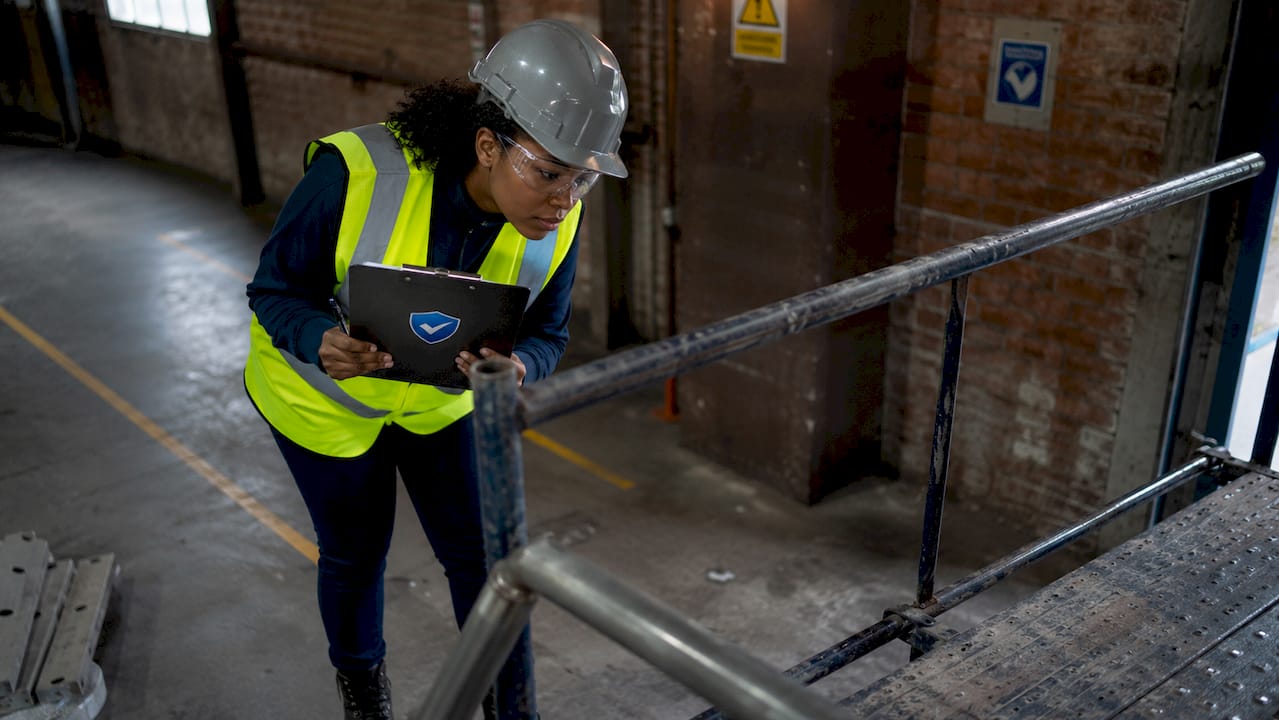
1. What are the most common safety compliance violations?
Fall protection leads OSHA's list for 15 consecutive years, with 5,914 citations in 2025 alone. That persistence signals a structural problem, not a one-time oversight. The remaining top violations by citation count are:
- Violation Category: Fall protection · 2025 Citation Count: 5,914
- Violation Category: Hazard communication · 2025 Citation Count: 2,546
- Violation Category: Ladders · 2025 Citation Count: 2,405
- Violation Category: Lockout/Tagout · 2025 Citation Count: 2,177
- Violation Category: Respiratory protection · 2025 Citation Count: 1,953
Each category represents a distinct failure mode. Fall protection violations typically involve missing guardrails, unprotected floor openings, or absent personal fall arrest systems on roofs and scaffolding. Hazard communication failures center on incomplete Safety Data Sheets, unlabeled chemical containers, or workers who never received chemical hazard training. Ladder violations include using the wrong ladder type for the task, missing rungs, or positioning ladders at unsafe angles.
Lockout/Tagout (LOTO) failures are particularly dangerous. LOTO procedures control hazardous energy during equipment servicing. When employers skip written procedures or workers bypass lockout steps to save time, the result is often a severe injury. Respiratory protection violations frequently trace back to missing fit tests, expired cartridges, or no written respiratory protection program on file.
Pro Tip: Conduct a gap audit against OSHA's top 10 list before your next scheduled inspection. Map each standard to your current documentation and training records to identify weak points before an inspector does.
2. Why do these violations keep happening?
Most violations trace to organizational oversights, not complex engineering failures. The root causes are preventable and fall into a consistent pattern across industries.
The most common drivers include:
- Failure to enforce existing training. Employers write safety programs but never verify that workers actually follow them.
- Deferred equipment maintenance. Ladders with cracked rungs, worn respirator cartridges, and damaged fall arrest harnesses stay in service past their safe lifespan.
- Incomplete hazard assessments. Worksites change, but hazard reviews do not keep pace with new equipment, new chemicals, or new workflows.
- Inadequate supervision. Frontline supervisors lack the authority or training to stop unsafe work practices in real time.
- Assuming federal compliance covers everything. Local regulations often impose stricter requirements, such as California's Risk Management Program for chemical facilities, which catches unprepared employers off guard during state-level inspections.
Reactive safety programs wait for incidents to reveal gaps. Proactive programs treat every near-miss, equipment deficiency, and training lapse as a leading indicator of the next serious injury. The organizations that close violations fastest are the ones that never stopped looking for them.
Repeat violations tell the clearest story about organizational culture. 3,244 repeat violations appeared in 2026 enforcement data. Repeat violations occur when the same standard is cited within a five-year window. They signal that the original citation produced no lasting change.
3. How willful and repeat violations escalate risks and penalties
OSHA classifies violations into four categories: other-than-serious, serious, willful, and repeat. Willful violations carry the highest penalties because they involve employers who knowingly expose workers to hazards. A 2026 amputation case resulted in nearly $200,000 in penalties and multiple willful citations. That outcome reflects both the financial and reputational damage that follows deliberate noncompliance.
The escalation process from citation to enforcement action follows a defined sequence:
- Inspection and citation issued. OSHA issues a citation with a proposed penalty and an abatement deadline.
- 15-business-day response window opens. Employers must comply, pay the penalty, or formally contest the citation within this window. Missing the deadline removes most legal recourse.
- Informal conference option. Employers can request an informal conference with the OSHA area director to negotiate penalty reductions or abatement timelines before the deadline passes.
- Repeat violation flag applied. If the same standard is cited again within five years, OSHA applies the repeat classification and multiplies the base penalty.
- Willful classification triggers enhanced scrutiny. Willful citations can prompt referrals to the Department of Justice for criminal prosecution in cases involving worker fatalities.
Pro Tip: Log every OSHA citation in a centralized system the day it arrives. The 15-business-day window closes faster than most teams expect, especially when key personnel are traveling or on leave.
The repeat violation ratio is one of the most telling compliance metrics available. A high ratio indicates that citations are being closed on paper but not corrected in practice. That gap between documented abatement and actual workplace change is where the most serious injuries occur.
4. What strategies prevent safety regulation failures?
Proactive hazard assessments and recurring training are the two highest-impact prevention tools available to compliance teams. Both require consistency, not just initial implementation.
Effective prevention programs share these characteristics:
- Scheduled, recurring training cycles. One-time onboarding training does not satisfy OSHA requirements for ongoing competency. Training must be repeated at defined intervals and documented with employee acknowledgment records.
- Pre-task hazard assessments. Workers complete a written or digital hazard review before starting high-risk tasks such as confined space entry, elevated work, or energy isolation.
- Equipment inspection logs. Ladders, harnesses, respirators, and LOTO devices require documented inspection records. Missing records are treated the same as missing inspections during an audit.
- Safety Score benchmarking. Safety Score metrics that weight violation rate, serious and willful ratios, and repeat offense frequency give compliance teams a quantified baseline. Teams that track their score over time can identify deteriorating trends before an inspection reveals them.
The regulatory nuance point deserves direct attention. Federal OSHA sets the floor, not the ceiling. States with their own OSHA-approved plans, including California, Michigan, and Washington, frequently enforce standards that exceed federal requirements. California's chemical facility oversight rules, for example, require emergency planning documentation that federal standards do not mandate at the same level. Compliance teams operating across multiple states need a jurisdiction-specific checklist, not a single federal standard applied uniformly.
- Prevention method: Recurring training cycles · Primary benefit: Closes knowledge gaps before violations occur · Best applied when: Onboarding and annual recertification
- Prevention method: Pre-task hazard assessments · Primary benefit: Identifies site-specific risks in real time · Best applied when: Before elevated work, energy isolation, or chemical handling
- Prevention method: Safety Score benchmarking · Primary benefit: Quantifies compliance posture for leadership reporting · Best applied when: Quarterly compliance reviews
- Prevention method: Jurisdiction-specific checklists · Primary benefit: Catches state-level requirements federal audits miss · Best applied when: Multi-state operations
Pro Tip: Use workflow automation to trigger training reminders and hazard assessment prompts on a schedule. Manual tracking creates gaps when staff changes or workloads spike.
Key Takeaways
The most preventable safety compliance violations share a single root cause: organizational systems that document requirements but fail to enforce them consistently.
- Point: Fall protection tops every list · Details: Fall protection has led OSHA citations for 15 consecutive years, making it the single highest-priority area for any compliance audit.
- Point: Violations are organizational, not technical · Details: Most cited violations trace to training enforcement failures and deferred maintenance, not complex engineering deficiencies.
- Point: Willful violations carry severe consequences · Details: A single willful citation can exceed $200,000 in penalties and trigger criminal referral in fatality cases.
- Point: The 15-day window is non-negotiable · Details: Employers have 15 business days to respond to an OSHA citation; missing this deadline eliminates most legal options.
- Point: Safety Score benchmarking predicts risk · Details: Tracking violation rate, repeat ratio, and serious citation frequency gives teams a leading indicator before regulators intervene.
Why compliance culture matters more than compliance checklists
I have worked with compliance teams that had binders full of documented procedures and still received serious citations. The binders were not the problem. The problem was that no one in the building had read them since the year they were written.
The organizations I have seen avoid repeat violations share one trait: they treat compliance as a daily operational habit, not an annual documentation exercise. Their supervisors ask about hazard controls before work starts. Their training records reflect actual completion, not just enrollment. Their equipment gets inspected on schedule because someone owns that task by name, not by department.
The data supports this observation. Repeat violations signal systemic culture breakdown, not isolated lapses. When the same standard gets cited twice in five years, the organization did not fix the underlying behavior. It fixed the paperwork.
Compliance technology helps, but only when it reflects real workflows. A platform that automates training reminders and tracks incident updates in real time closes the gap between what is documented and what is actually happening on the floor. That gap is where most violations live.
The shift from reactive to proactive compliance is not a technology decision. It is a leadership decision. Technology makes the commitment easier to sustain.
— Luka
Guardiahr's tools for OSHA compliance and violation prevention
Safety and compliance professionals who want to reduce citation exposure need more than a checklist. They need a system that connects training records, hazard assessments, and incident tracking in one place.
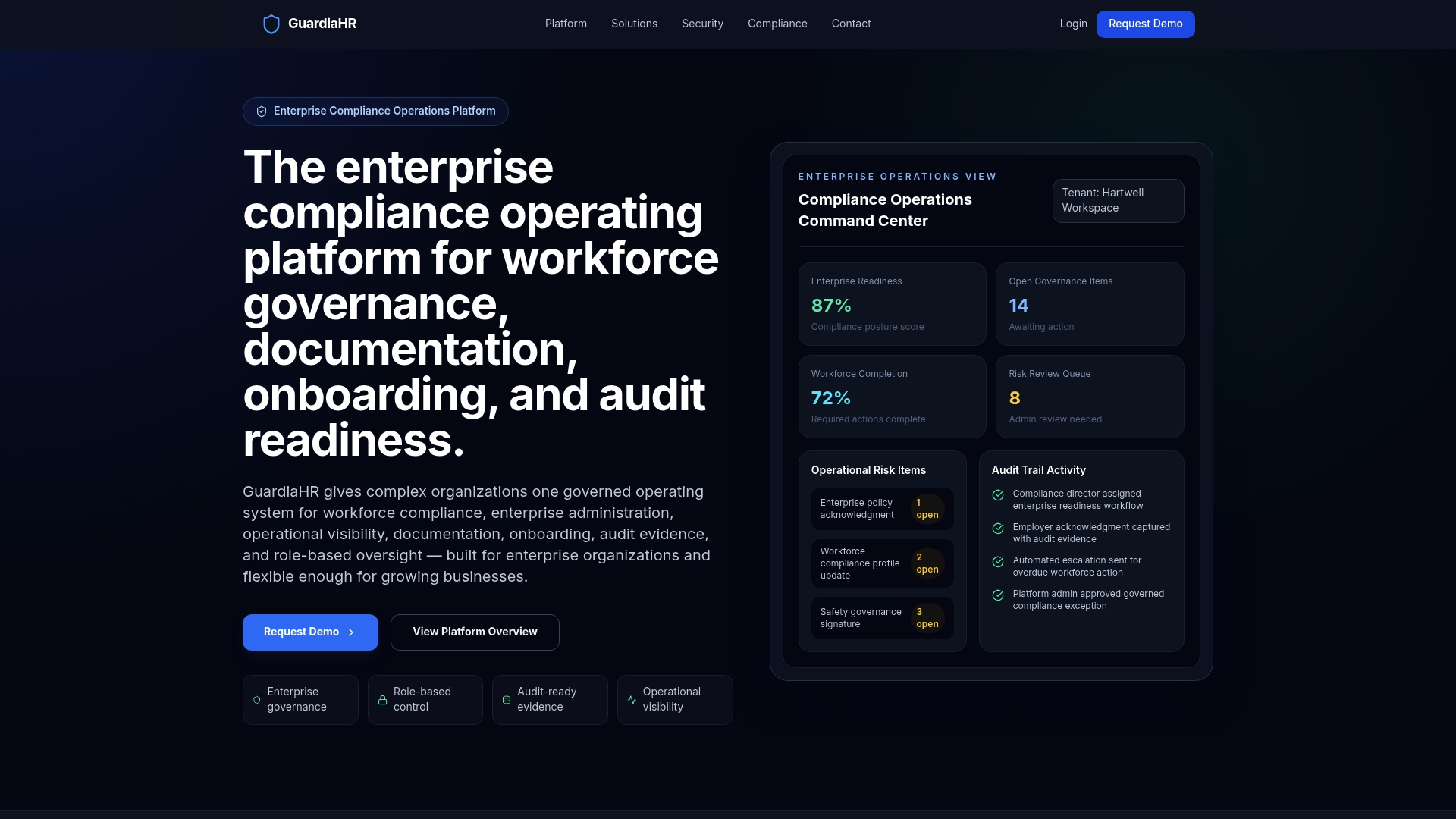
Guardiahr's OSHA compliance tools centralize hazard tracking, employee training documentation, and audit-ready records under a single governed platform. Compliance teams use Guardiahr to schedule recurring training cycles, log equipment inspections, and monitor their compliance posture score across departments. The platform's role-based administration gives safety managers real-time visibility into which employees are current on required training and which locations carry elevated citation risk. For teams managing compliance checkpoints across multiple jurisdictions, Guardiahr surfaces state-specific requirements alongside federal standards so nothing falls through the cracks.
FAQ
What is the most cited OSHA violation?
Fall protection is OSHA's most cited standard, with 5,914 violations in 2025. It has held the top position for 15 consecutive years.
What is the difference between a willful and a repeat violation?
A willful violation occurs when an employer knowingly exposes workers to a hazard. A repeat violation occurs when the same standard is cited again within five years of the original citation.
How long does an employer have to respond to an OSHA citation?
Employers have 15 business days from receipt of a citation to pay the penalty, comply with abatement requirements, or formally contest the citation.
Why do health and safety breaches keep recurring at the same organizations?
Recurring violations indicate that abatement was documented but not sustained in practice. Organizations with high repeat violation ratios typically lack enforcement mechanisms that hold supervisors accountable between inspections.
How can Safety Score benchmarking help prevent violations?
Safety Score metrics that track violation rate, serious citation ratio, and repeat offense frequency give compliance teams a quantified view of their risk posture. Teams that monitor these metrics quarterly can identify deteriorating trends before an OSHA inspection reveals them.